What Are the Best Types of Fireproof Windows?
Choosing the best Fireproof Windows starts with one important correction: no window is completely fireproof. Fire-rated glazing is tested as part of an assembly, including its frame, seals, and installation. A pane that looks robust may still fail if its surrounding components are unsuitable. Details matter.
Fire-safety pioneer Benjamin Franklin’s familiar warning, “An ounce of prevention is worth a pound of cure,” remains relevant when selecting protective glazing. The right choice depends on the opening, the required fire rating, and whether the project needs to limit flames alone or also heat transfer. Ceramic glass, fire-protective glass, and fire-resistive glazing can perform differently under tested conditions. They are not interchangeable. Product labels deserve careful reading.
This guide compares common types, explains their strengths, and highlights practical questions for homeowners, designers, and facility managers. It also considers frames, visible clarity, maintenance, and installation quality. A rated product cannot compensate for a poorly matched assembly. Nor should appearance be the only deciding factor. I once thought “higher rating” automatically meant “best”; that is too simple. The best option is the one tested for the intended use and selected with a qualified professional. Check the documentation, not just the sales description. Fire performance depends on the complete system.
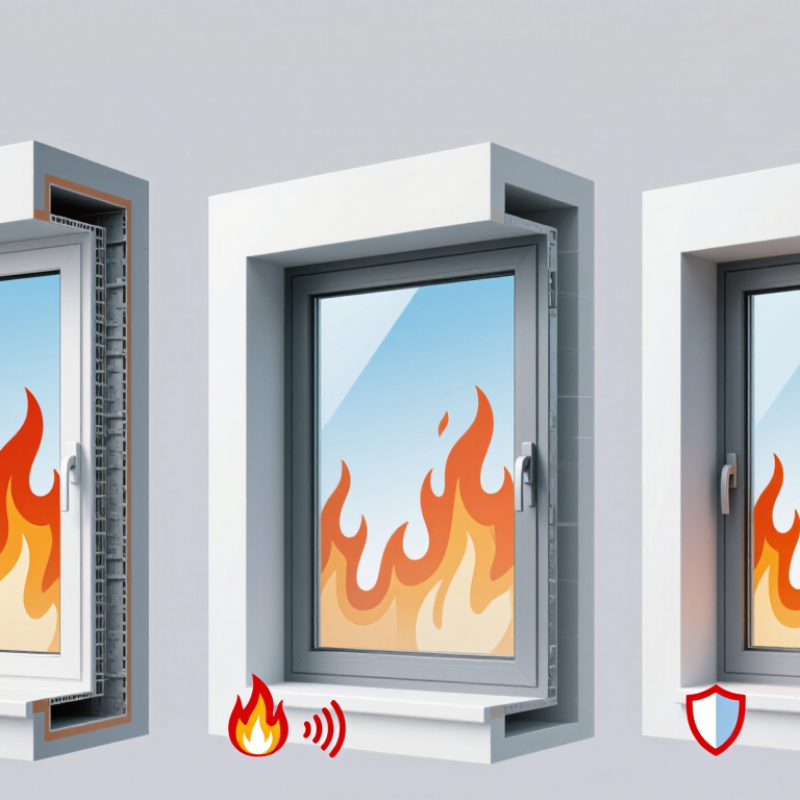
What Fire-Rated Windows Are and How They Resist Heat and Flames
A fire-rated window is a tested assembly, not simply a pane of heat-resistant glass. Its glazing, frame, seals, and fixings work together to resist fire for a stated period. That period applies only to the tested configuration and correct installation. Not just glass.
Some fire-protective windows are designed to hold back flames and hot gases. They may not prevent intense heat from passing through. Fire-resistive assemblies are also tested for limiting heat transfer, helping reduce the chance that nearby materials ignite on the other side. The distinction matters in corridors and shared walls, where people may need time to move away.
Under high heat, special glazing may crack, but its layers can help keep the opening closed. Intumescent seals expand as temperatures rise, closing small gaps around the frame. Frames and anchors must also stay secure; a strong pane cannot compensate for a loose frame. Small gaps matter. Ratings vary by product and application, so check the assembly’s test documentation and installation details with a qualified professional. It is easy to focus on the glass and overlook the edges. That is a common blind spot. Even a correctly rated window needs suitable maintenance, since damaged seals or altered hardware can weaken its performance.
What Are the Best Types of Fireproof Windows?
Common Fire-Rated Glazing Test Durations
Fire-protection-rated glazing helps resist flames and hot gases; fire-resistance-rated glazing is also tested to limit heat transfer. The durations shown are common rating intervals, not a guarantee that every window type is available at each rating. Performance depends on the complete tested assembly—including the glass, frame, and installation—and applicable building codes.
How Fire-Resistance Ratings and Testing Standards Are Classified
Fire-resistance ratings describe how a window performs during a controlled fire test; they do not mean it is fireproof. Ratings often state a time, such as 20, 45, or 60 minutes, but the available classes depend on local codes and the test method. A rating may measure resistance to flames and hot gases, or include limits on heat passing through the glass. Those are different levels of protection.
Not interchangeable.
Testing evaluates the window as an assembly, not just its glass. The frame, glazing, seals, hardware, and installation details can all affect performance. In the United States, NFPA 257 is one standard used to test fire window assemblies. European classifications may use E for integrity, EW for integrity with limited radiation, and EI for integrity plus insulation. The terms can be confusing, so check the test standard and the specific performance criteria behind a rating.
For a real project, compare the required rating with the tested assembly’s report, including its permitted size and installation method. A window tested in one frame or wall configuration may not qualify when those details change. Look for clear documentation from a recognized testing or certification body, and confirm local code requirements with a qualified building professional. Small details matter. Even careful specifications can be easy to misread.
Which Fire-Rated Window Types Suit Different Building Needs
Fire-rated windows should match the room’s risk, required fire-resistance period, and need for daylight—not just the opening size. The NFPA’s Fire Loss in the United States During 2023 estimated 1.389 million fires and 3,670 civilian fire deaths. Those figures underline why window assemblies must be selected as part of a building’s wider fire strategy, not as decorative glass alone.
For small vision panels in interior doors or partitions, fire-protection glazing, including ceramic or specially treated glass, can offer clear sightlines and a rated barrier. Its limits matter: some types resist flames but do not control radiant heat as well as fire-resistive glazing.
Corridors, stair enclosures, and areas near escape routes may need insulated, multi-layer fire-resistive glass to reduce heat transfer. It can be heavier and costlier. No universal winner.
For exterior openings near neighboring buildings, confirm the required rating and whether the tested assembly includes the frame, glazing, and hardware. A high-rated pane in an untested frame is not a reliable substitute. Ask for test documentation under applicable standards, such as NFPA 257 or UL 9, and check the rating for the complete window assembly. A practical detail: verify that the listed size matches the actual opening. Even careful specifications can miss site conditions. That deserves a second look.
How to Compare Glazing, Frames, and Performance Limits
Comparing fire-rated windows means checking the whole assembly, not just the glass. A pane marked “fire-rated” does not make an ordinary frame equivalent. Look for the tested glazing, frame, seals, and hardware to be specified together. Small details matter.
Glass types have different limits. Fire-protective glazing can resist flames and smoke, but may allow significant heat through. Fire-resistive glazing is tested to limit heat transfer as well. Check the listed duration and test standard, such as ASTM E119 or UL 263, rather than relying on a product label alone. NFPA’s Fire Loss in the United States During 2023 estimated 1.39 million fires and 3,670 civilian deaths; that national data shows the stakes, but does not predict how a particular window will perform.
Frame choice also matters. Steel frames are common in rated assemblies, while other frame materials may have narrower rating limits. Confirm that the frame and glazing share the required fire rating, and check permitted glass area, temperature-rise limits, and whether the assembly was tested with a hose stream. NFPA 80 and the applicable building code help define where specific glazing types may be used. I still find one point easy to miss: a time rating is a test result, not a promise of real-fire survival. A qualified designer can match the assembly to the opening and hazard.
How to Choose and Install Fire-Rated Windows Safely
What Are the Best Types of Fireproof Windows?
How to Choose and Install Fire-Rated Windows Safely
A “fireproof” window is more accurately called fire-rated glazing. It is tested as a complete assembly, including the glass, frame, seals, and hardware. Choose a rating suited to the wall and its intended protection. Check the product’s test documentation and installation instructions, not just the glass label. A higher rating is not automatically the right fit.
Tips: Confirm the required rating with a qualified building professional. Match the frame and glazing to the tested assembly. Keep labels and paperwork for future inspections. Never cut, drill, or substitute parts unless the manufacturer’s instructions permit it.
Installation matters as much as selection. The opening must be prepared to the specified dimensions, and approved anchors and perimeter materials must be used. Gaps, loose fasteners, or ordinary sealant can compromise the assembly. Have trained installers follow the listing and applicable local requirements. Afterward, inspect for damage and ensure the window operates as designed. It is easy to focus on the glass and overlook the frame; I would not assume a window is safe based on appearance alone. Fire-rated glazing can help limit fire spread, but it does not make a room fireproof.