Leave Your Message

2026 Best Wooden Double Glazed Windows for Global Buyers?

Choosing the right Wooden Double Glazed Windows involves more than comparing catalogue photos or headline prices. For global buyers, climate, building design, maintenance expectations, and supplier capability all matter. A well-made timber frame can bring warmth and character to a room, while double glazing may help reduce heat transfer and outside noise. Performance depends on the complete window, not the glass alone. Frame construction, seals, hardware, installation, and local conditions deserve careful attention. Details matter.

This guide explores what to look for in 2026, from timber species and glazing specifications to finishes, testing documents, and after-sales support. Buyers should ask suppliers for clear product data, relevant test reports, warranty terms, and installation guidance. Ask for evidence. A polished brochure is useful, but it cannot replace verifiable specifications. Compare like with like, including frame dimensions, opening style, glass build-up, and included hardware. Check how the finish is maintained, especially in exposed or humid settings. Requirements differ between regions, so confirm suitability with a qualified local professional before ordering. No single window fits every project. The most attractive option may not be the most practical, and that trade-off is worth admitting. A careful shortlist, based on documented performance and realistic maintenance needs, can help buyers make a more confident decision.
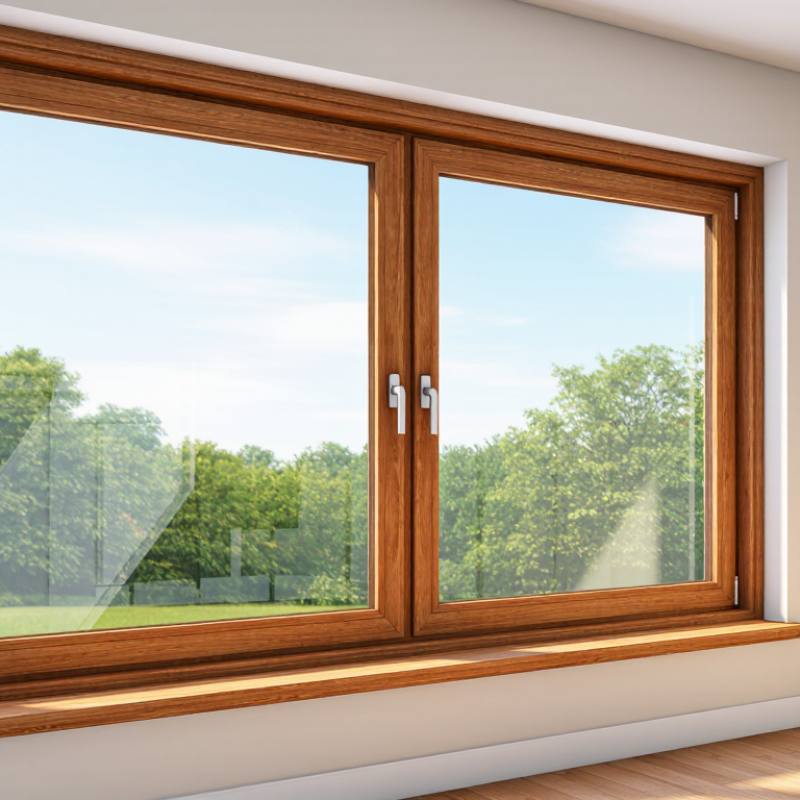
2026 Best Wooden Double Glazed Windows for Global Buyers?

Define Wooden Double-Glazed Windows: Two Panes Sealed as an Insulating Glass Unit

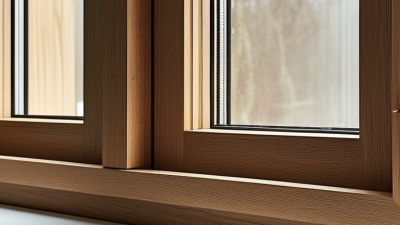
Wooden double-glazed windows combine a timber frame with an insulating glass unit, or IGU. The unit contains two separate panes, held apart by a spacer and sealed around their edges. A narrow cavity sits between the panes. It usually contains dry air, though some units use an insulating gas.

The sealed cavity slows heat transfer compared with a single pane. The spacer helps maintain an even gap, while the edge seal keeps moisture from entering the unit. Timber supports the glass and can be repaired or refinished, but it needs suitable care. The frame alone does not determine how well the window insulates.

Look closely at the glass edges and timber joints. A persistent mist or droplets between the panes can indicate a failed seal; moisture on the room-facing surface has other possible causes. Small detail. Also check whether the frame drains water properly and whether the glazing unit matches the opening. Buyers sometimes focus only on pane count. That is not enough. Glass thickness, cavity width, frame condition, and installation all affect comfort and durability, and results vary with climate and upkeep. I would avoid treating any single specification as a guarantee.
Compare U-Factor, SHGC and Air Leakage Using NFRC Rating Metrics

For global buyers comparing wooden double glazed windows, NFRC ratings offer a consistent reference point. Check the certified whole-window values, not just the glass specification: frame, spacer, sash, and seals all affect performance. Lower U-factor means less heat transfer through the window. In cold regions, a lower value can help limit heat loss. Small differences matter.

SHGC shows how much solar heat enters through the window. A higher rating may help in cold, sunny locations, while a lower one can reduce unwanted heat in hot climates. Orientation matters too. A west-facing window can receive strong afternoon sun, even in a mild climate. Air leakage measures unwanted airflow through the unit; lower values generally indicate a tighter window. Confirm the test method and units, since listings may not present this figure consistently.

Compare windows of similar size and configuration, and check that each rating covers the complete assembly. NFRC figures are useful for comparison, but they do not describe every detail of real-world installation. Poor fitting or worn weatherstripping can undermine good test results. Wooden frames also need suitable finishes and regular inspection, especially around exposed edges. NFRC data can guide a shortlist; local climate and building requirements still deserve a separate check.

Set a Thermal Target: Whole-Window Uw ≤ 1.3 W/m²·K for High-Performance Designs

2026 Best Wooden Double Glazed Windows for Global Buyers?

For high-performance wooden double glazed windows, set a clear thermal target: whole-window Uw at or below 1.3 W/m²·K. Lower values indicate less heat transfer through the complete window. That means the frame, glass, spacer, and edge details all count. Not just the center of the glass.

Check the declared Uw for the actual window size and opening style you plan to buy. A small fixed unit may perform better than a large tilt-and-turn window with the same glazing. Ask for test data or a technical declaration that identifies the tested configuration. Be cautious when a supplier shares only a glass Ug value; it does not describe the whole window. Details matter.

A good number is only part of the decision. On a cold morning, poor installation can leave a chilly strip near the frame, even when the product meets its target. Check the installation method, seals, and junction with the wall. Wood also responds to moisture, so protective finishes and sensible maintenance deserve attention. This target is not magic. It can be difficult to achieve in every size and climate, and that limitation should be discussed openly before ordering.

Select Timber, Low-E Glass and Gas Fill for Climate-Specific Performance

For wooden double-glazed windows, match the timber and glass package to the local climate. In damp coastal areas, specify durable or appropriately treated timber, sealed joints, and drainage details; inspect corners closely. Cold regions generally benefit from a lower U-factor, which limits heat loss. In hot, sunny climates, choose a lower solar heat gain coefficient (SHGC) to reduce unwanted solar heat. The U.S. Department of Energy estimates that windows account for about 25–30% of residential heating and cooling energy use. Small specification choices matter.

Low-E coatings help control radiant heat, but the right surface and coating type depend on climate and orientation. Argon between panes can improve insulation; krypton may suit narrower cavities, though it usually costs more. Ask suppliers for tested U-factor and SHGC values, not just “energy-efficient” claims. The National Fenestration Rating Council provides standardized ratings for comparing products. ENERGY STAR estimates that certified replacement windows can save about 12% on household energy bills compared with non-certified products; actual savings vary with climate, installation, and existing windows. No glass package fixes poor fitting. Even a well-designed unit can disappoint if the frame is poorly sealed or left exposed to standing water.

2026 Best Wooden Double Glazed Windows for Global Buyers? - Select Timber, Low-E Glass and Gas Fill for Climate-Specific Performance

Climate / Use Case Timber Selection Suggested Double-Glazed Unit Low-E and Gas-Fill Guidance Whole-Window Performance Targets Key Specification Checks
Cold and heating-dominated
Long winters; limited summer overheating risk
Engineered softwood such as pine, or a durable species suited to local exposure. Specify protected end grain and a maintainable exterior finish. Two panes, typically 4 mm glass with a 12–16 mm sealed cavity; use safety glass where required by location or code. Use a low-E coating selected for strong heat-loss reduction while allowing useful winter solar gain. Argon is commonly used in sealed insulating glass units. Target whole-window U-factor: 0.25–0.30 Btu/(h·ft²·°F) or lower. For south-facing glazing, a higher SHGC may help capture winter sun, subject to shading and overheating analysis. Check whole-window—not center-of-glass—ratings, air leakage, warm-edge spacer details, installation air sealing, and local energy-code requirements.
Very cold or high-elevation
Severe winters and high heating demand
Stable engineered timber with suitable durability for the site; confirm that the frame, joints, and finish are designed for repeated moisture and temperature changes. High-performance double glazing with a 14–16 mm cavity may be appropriate where the frame and glazing system are designed for it. Choose a low-E coating with low emissivity and a gas-filled cavity. Argon is a practical common choice; krypton may be considered for narrower cavities, subject to cost and verified unit ratings. Set a project-specific whole-window U-factor target, commonly 0.20–0.25 Btu/(h·ft²·°F) for high-performance double-glazed products. Confirm that the selected product can achieve it. For the coldest sites, compare triple glazing as well: it may achieve lower heat loss than double glazing. Review condensation resistance and local certification data.
Mixed or temperate climate
Heating and cooling needs vary seasonally
Engineered pine or another locally available, appropriately durable timber; select the finish and maintenance schedule for the building’s exposure. Two panes with a sealed 12–16 mm cavity provide a common starting point for a balanced specification. Use a balanced low-E coating and argon fill where available. Select the coating by orientation: east- and west-facing glass may need stronger solar control than shaded or north-facing glass. Typical design targets are a whole-window U-factor of about 0.25–0.30 Btu/(h·ft²·°F); choose SHGC according to orientation, shading, and heating-versus-cooling priorities. Compare U-factor and SHGC together. A lower SHGC can reduce unwanted solar heat but may also reduce useful winter gains.
Hot, sunny, cooling-dominated
High solar exposure and substantial cooling demand
Durable, dimensionally stable timber suitable for the local UV, heat, and moisture exposure; provide effective exterior protection and drainage. Two panes with a sealed cavity; consider solar-control glazing on exposed elevations. Specify a solar-control low-E coating with a lower SHGC on sun-exposed façades. Argon can be used in the sealed cavity, but shading and solar-control performance are key priorities. As a starting point, target whole-window U-factor of 0.25–0.32 Btu/(h·ft²·°F) and SHGC around 0.20–0.35 on highly exposed façades; confirm through building-specific analysis. Consider external shading, overhangs, and orientation. Check visible light transmission as well as SHGC to avoid an unnecessarily dark interior.
Humid, rainy, or coastal
Frequent wetting, wind-driven rain, or salt exposure
Use a timber species and finish system rated for the actual exposure. Cedar or larch may be suitable in some designs, but durability depends on grade, detailing, and maintenance. Use a well-sealed double-glazed unit with appropriate safety-glass selections and durable perimeter seals for the project conditions. Low-E and argon can be specified according to local thermal needs. Ensure that the IGU edge seal and glazing details are suitable for the anticipated moisture and temperature exposure. Set U-factor and SHGC targets based on local energy requirements; verify the complete window assembly’s tested ratings rather than relying on glass-only values. Prioritize sill drainage, flashing, water-shedding details, protected end grain, compatible coatings, and a realistic inspection and maintenance plan.
Noise-sensitive urban setting
Traffic or other exterior noise is a major concern
Choose timber framing for the required thermal, durability, and design needs; sound control depends on the complete window assembly, not the frame material alone. Consider different pane thicknesses within a double-glazed unit and a suitable cavity width. Acoustic laminated glass may be appropriate where a project assessment calls for it. Low-E and gas fill address thermal performance; they do not, by themselves, guarantee strong sound insulation. Ask for tested acoustic ratings for the proposed configuration. Set U-factor and SHGC for the local climate, and specify a tested sound rating—such as STC or Rw—based on the project’s acoustic assessment. Review frame seals, opening type, perimeter installation, and the full tested assembly. Acoustic performance can be limited by air gaps and poor installation.

Reading the targets: U-factor is expressed in Btu/(h·ft²·°F); lower values indicate less heat transfer. SHGC is a dimensionless fraction; lower values admit less solar heat. Values shown are general selection targets, not guaranteed product ratings. Actual performance depends on frame design, glass, spacer, size, opening type, installation, and the applicable test standard. Request certified whole-window data and confirm local code requirements before specifying.

Verify EN 1279 Durability, Responsible Timber Sourcing and Installation Quality

For 2026 purchases, check what the test evidence actually covers. EN 1279 addresses insulating glass units, not the entire wooden window. Request reports identifying the glass configuration, edge seal, and relevant durability tests. Match those details to the unit being quoted; a similar-looking specification is not enough. Check the date. Ask how the manufacturer controls production and handles replacement units.

Responsible timber sourcing should be traceable beyond a broad claim of “sustainable wood.” Ask for the timber species, country or region of origin, and supply-chain documents. Where certification is offered, verify its scope and whether it covers the product or only part of the supply chain. Also ask how the frame is protected against moisture and weather exposure. Paperwork helps, but it cannot show how every board was stored.

Installation can make or break performance. Confirm that the installer checks the opening dimensions, levels the frame, and seals the sill and perimeter against water and air leaks. Photograph the flashing and sealing before interior trim covers them. A tidy certificate folder can still hide a poor installation. That is easy to overlook. Allow time for adjustment after fitting, and ask who will inspect the windows if condensation or draughts appear.

2026 Best Wooden Double Glazed Windows: Key Checks for Global Buyers

Verify EN 1279 durability evidence, responsible timber sourcing and installation quality before comparing products.

How to read this chart: These are EN 1279 test limits, not product performance ratings. Request the applicable test reports and confirm the standard edition and product configuration. For timber sourcing, check traceable chain-of-custody documentation; for installation, check perimeter sealing, weatherproofing and drainage details.